
The Nicol Edit / From the Nicol Retailer Kitchen
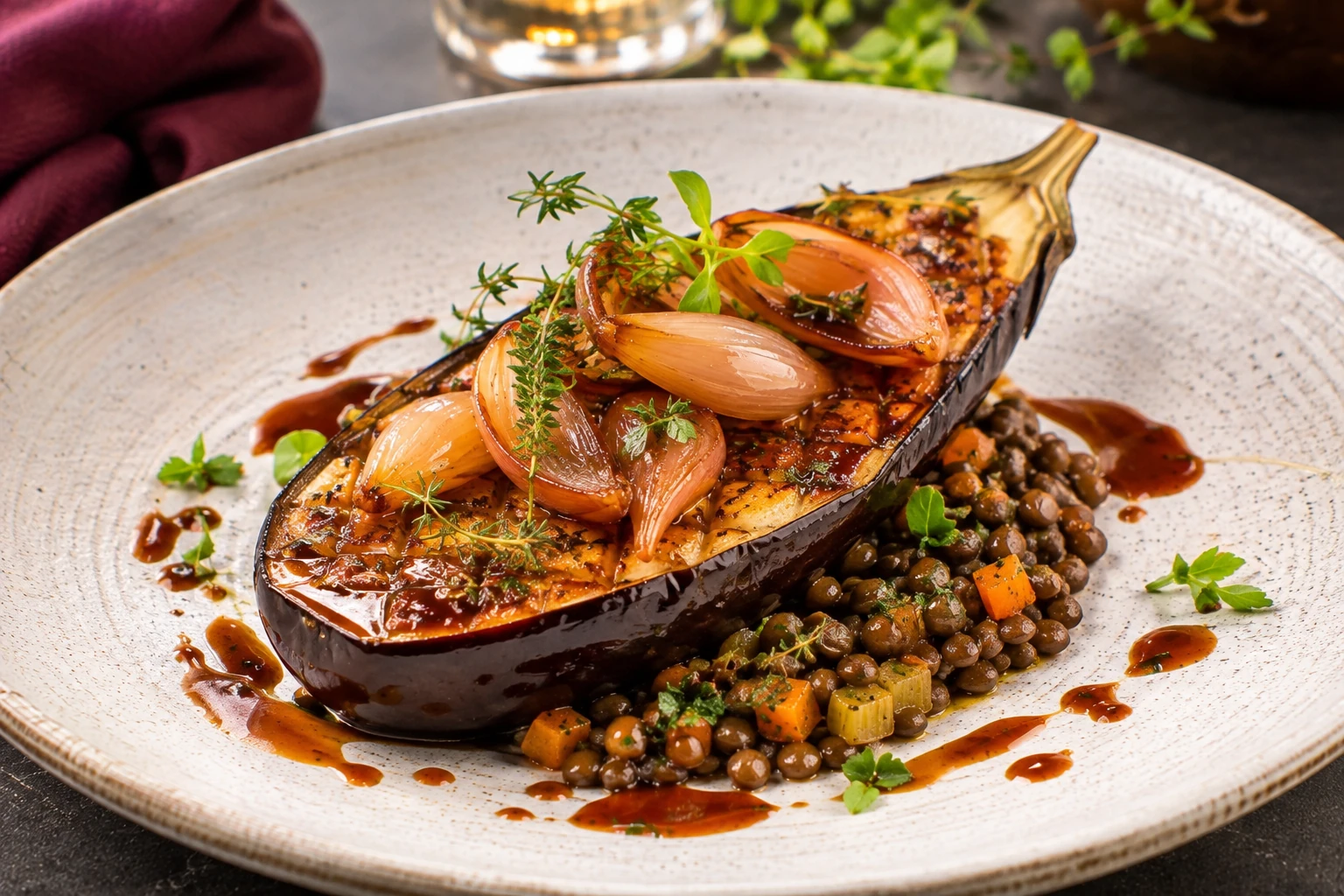
Roasted Aubergine with Shallot Confit, Puy Lentils & Black Garlic Jus
Golden roasted aubergine, gently braised banana shallots, earthy lentils and a smooth black garlic jus. A thoughtful, French-inspired vegan main course that brings restaurant-style cooking into the comfort of your own kitchen.
The Story Behind the Recipe
Sometimes, the simplest ingredients deserve the most attention
There is something particularly satisfying about taking a familiar ingredient and preparing it with a little more care. Aubergine is a wonderful example. When roasted properly, its flesh becomes beautifully tender, with golden edges and a rich, savoury flavour.
For this recipe, we have paired roasted aubergine with gently braised banana shallots, earthy Puy lentils and a smooth black garlic jus.
Each component has its own purpose. The lentils bring substance, the shallots introduce delicate sweetness, and the black garlic adds a mellow depth that brings the whole dish together.
What we particularly enjoy about this recipe is that it feels special without being unnecessarily complicated. It is the kind of dish we would happily serve at a dinner party, but it is equally suited to a relaxed weekend meal when there is a little more time to enjoy cooking.
“Good cooking is often about giving familiar ingredients the time and attention they deserve.”
The Flavour Edit
Why we love this combination
The secret is balance. Aubergine has a naturally mild flavour, making it an excellent partner for ingredients with more distinctive characteristics. Roasting develops its savoury notes, while slow cooking brings out the natural sweetness of the shallots.
01 / The Centrepiece
Beautifully roasted aubergine
We score the aubergine before roasting to expose more of its flesh to the seasoning and heat. The aim is a golden surface and a completely tender interior.
02 / The Sweetness
Slow-cooked banana shallots
Banana shallots are gently braised with vegetable stock, thyme and sherry vinegar until soft and lightly glazed. Their delicate sweetness complements the aubergine without overpowering it.
03 / The Foundation
Earthy Puy lentils
Puy lentils have a distinctive earthy flavour and retain their shape when cooked carefully. We dress them simply with olive oil, sherry vinegar and parsley to bring freshness to the plate.
04 / The Finishing Touch
A smooth black garlic jus
Black garlic brings gentle sweetness and savoury complexity. Combined with vegetable stock and balsamic vinegar, it creates a smooth finishing sauce that brings the individual components together.
Ingredient note: Genuine Lentille Verte du Puy is a protected regional product. French-style green lentils can also be used, although cooking times may vary.
The Ingredient Edit
Why we recommend banana shallots
At Nicol Retailer, we enjoy introducing customers to ingredients that are versatile enough for everyday cooking but can also make a special meal feel more considered.
Banana shallots are a good example. Their mild, aromatic flavour makes them particularly suitable for sauces, roasting and gentle braising. When cooked slowly, they develop a lovely sweetness while retaining enough structure to be presented attractively on the plate.
In this recipe, we cut the shallots into petals and cook them gently until tender. It is a simple technique, but one that makes a noticeable difference to both flavour and presentation.
Shop the Nicol Retailer Edit
Discover banana shallots for your next meal
Whether you are preparing this roasted aubergine recipe or making a sauce for a weekend dinner, banana shallots are a useful ingredient to keep in your kitchen.
Shop Banana Shallots Explore Fresh ProduceFor preparation and storage advice, read our Banana Shallots Ingredient Guide .
The Art of Entertaining
A vegan main course we would happily serve to guests
One of the reasons we enjoy preparing this dish for guests is that much of the work can be done in advance.
The lentils, shallots and black garlic jus can be prepared ahead and refrigerated separately. When it is time to serve, the aubergines can be roasted while the other components are reheated.
The finished dish is satisfying without feeling heavy, and each element contributes something different to the plate.
For more inspiration, explore vegan recipes from the Nicol Retailer Kitchen or browse our vegan grocery guide .
From Our Kitchen to Yours
Ready to cook?
We believe good cooking begins with understanding your ingredients. You do not need complicated techniques to create a memorable meal, but taking the time to roast, braise and season each component properly makes a noticeable difference.
The complete recipe below includes ingredient quantities, cooking instructions, equipment, serving information and nutritional estimates.
Allow approximately 25 minutes for preparation and 50 minutes for cooking, with some components prepared simultaneously. The recipe serves four.

Roasted Aubergine with Shallot Confit, Puy Lentils & Black Garlic Jus
Equipment
- Oven
- Large baking tray
- Baking parchment
- Heavy-based saucepan with lid
- Medium saucepan
- Frying pan
- Blender or stick blender
- Fine-mesh sieve
- Kitchen knife and chopping board
- Measuring jug and kitchen scales
Ingredients
Roasted aubergine
Shallot confit
- 240 g banana shallots, peeled and quartered lengthways
- 25 ml olive oil
- 80 ml vegetable stock
- 10 ml l sherry vinega
- 2 fresh thyme sprigs
- 1 g sea salt
Puy lentils
- 200 g dried Puy lentils
- 600 ml water
- 1 bay leaf
- 60 g finely diced celery
- 15 ml olive oil
- 15 ml sherry vinega
- 10 g flat-leaf parsley, chopped
Black garlic jus
- 25 g black garlic cloves
- 250 ml reduced-salt vegetable stock
- 15 ml balsamic vinegar
- 5 ml olive oil
Instructions
Roast the aubergines
- Preheat the oven to 200°C fan. Halve the aubergines lengthways and score the flesh in a shallow diamond pattern without piercing the skin. Brush with the 35ml olive oil and season with salt, pepper and thyme. Place cut-side down on a lined baking tray and roast for 25 minutes. Turn carefully and roast for another 10–15 minutes until deeply golden and tender.
Prepare the shallot confit
- Place the quartered shallots, 25ml olive oil, 80ml vegetable stock, 10ml sherry vinegar, thyme sprigs and 1g salt in a small covered saucepan. Cook over low heat for 20–25 minutes until completely tender. Remove the lid and reduce any remaining liquid until the shallots are lightly glazed.
Cook and dress the Puy lentils
- Rinse the Puy lentils. Put them in a saucepan with 600ml water and the bay leaf. Simmer for 20–25 minutes until tender but still holding their shape. Drain and discard the bay leaf. In a frying pan, soften the diced celery in 15ml olive oil for 4 minutes. Fold through the lentils, 15ml sherry vinegar and chopped parsley. Taste and adjust seasoning if needed.
Make the black garlic jus
- Blend the black garlic with 100ml of the vegetable stock until smooth. Transfer to a small saucepan with the remaining 150ml stock and balsamic vinegar. Simmer for 8–12 minutes until lightly reduced. Strain through a fine sieve if desired and whisk in 5ml olive oil. Keep the jus glossy and pourable.
Check the aubergines
- Check the aubergine flesh is soft and the scored surface caramelised. If necessary, roast for a further 5 minutes, watching closely. The halves should hold their shape while yielding easily to a fork.
Plate and serve
- Divide the warm lentils between four plates, slightly off-centre. Place one roasted aubergine half on each portion, cut-side up. Arrange glazed shallot petals along the aubergine and spoon the black garlic jus around the lentils. Garnish with a few parsley leaves if available. Serve immediately.
Notes
Nutrition
The Nicol Edit / Beyond the Recipe
A little more from our kitchen
We hope you enjoy preparing this roasted aubergine as much as we enjoyed developing the combination. What makes this dish particularly rewarding is the way a handful of familiar ingredients come together to create something special.
Below, we share a few of the details we pay attention to in our kitchen, along with suggestions for plating, preparing ahead and making the recipe your own.
The Chef’s Journal / Technique
Four details worth getting right
You do not need professional kitchen equipment to achieve a beautiful result. A little patience, careful seasoning and attention to texture will make the greatest difference.
Give the aubergine time
The aubergine should be completely tender when pierced with a knife, with a golden surface and soft interior. Larger aubergines may need a few additional minutes. We recommend judging doneness by texture rather than relying solely on the timer.
Keep the texture delicate
Simmer the lentils gently and begin checking them towards the end of the cooking time. They should be tender but still retain their shape. Dress them while warm so they absorb the olive oil, vinegar and parsley evenly.
Let sweetness develop naturally
We prefer to cook the banana shallots slowly until tender, allowing the stock to reduce into a light glaze. Keep the heat low enough to prevent scorching, and add a splash of water if the pan becomes dry before the shallots soften.
Balance the finishing sauce
Black garlic has a mellow, gently sweet flavour. Taste the jus before serving and adjust the seasoning carefully. We want it to complement the aubergine, not overwhelm the other ingredients.
The Art of Presentation
How we like to serve it
When plating this dish, we prefer to keep things simple. The aubergine has a beautiful natural shape, and the contrast between the golden flesh, green lentils and dark jus provides plenty of visual interest.
Begin with the lentils
Spoon the warm, seasoned lentils slightly off-centre on a shallow dinner plate. Keep them together to create a base for the aubergine.
Add the roasted aubergine
Place one aubergine half over the lentils, with the cut surface facing upwards.
Finish with shallots and jus
Arrange the glazed shallot petals over the aubergine. Spoon the black garlic jus around the plate and finish with a little fresh parsley or thyme.
“Our approach is simple: allow the ingredients to be the most beautiful part of the plate.”
The Hosting Edit / Planning Ahead
A dish that works beautifully for entertaining
We know that cooking for guests is more enjoyable when you are not trying to prepare everything at the last minute. Fortunately, much of this recipe can be organised in advance.
The Day Before
Prepare the components
Cook the lentils, prepare the shallot confit and make the black garlic jus. Cool promptly, then refrigerate separately in covered containers at 5°C or below.
Before Serving
Bring everything together
Roast the aubergines close to serving time. Reheat the prepared components thoroughly until steaming hot throughout, then assemble the plates and serve immediately.
Store leftovers promptly, ideally within two hours of cooking. Refrigerate at 5°C or below, use within 48 hours and reheat only once.
Your Questions / Our Kitchen Answers
Frequently asked questions
How do I stop roasted aubergine becoming watery?
Use a hot oven and avoid overcrowding the roasting tray. Allow enough time for the flesh to soften and the exposed surface to develop colour. Larger aubergines may need longer than the stated cooking time.
Can I use ordinary green lentils?
Yes. French-style green lentils are a suitable alternative to Puy lentils. Choose lentils that retain their shape and adjust the cooking time according to the packet.
Can I substitute regular shallots?
Certainly. Use the same prepared weight of ordinary shallots. Smaller shallots may soften more quickly, so check them regularly.
Is this recipe suitable for vegans?
The recipe is designed to be vegan. Check that your vegetable stock, vinegar and other packaged ingredients are suitable for a vegan diet.
Can this roasted aubergine recipe be gluten-free?
Yes, provided all ingredients are suitable. Check the vegetable stock, lentils and other packaged products for gluten-containing ingredients and cross-contact warnings before describing the finished dish as gluten-free.
What should I serve alongside it?
We designed this recipe as a complete main course. For a larger meal, a lightly dressed green salad or seasonal vegetables would make a lovely accompaniment.
The Ingredient Journal / Explore More
Continue discovering beautiful ingredients
One of the pleasures of cooking is discovering how much difference a single ingredient can make. If you enjoyed working with banana shallots, we invite you to explore our Banana Shallots Ingredient Guide for further preparation and storage advice.
For independent information about growing vegetables and culinary herbs, visit the Royal Horticultural Society .
For official UK guidance on food hygiene, storage and safe reheating, consult the Food Standards Agency .
The Nicol Retailer Shopping Edit
Bring this recipe to your own table
We hope this roasted aubergine recipe inspires you to try something different with familiar vegetables.
Whether you are planning a special dinner or simply looking for quality ingredients, explore our carefully selected fresh produce and plant-based grocery collections.
Shop Banana Shallots Browse Fresh Produce Explore Vegan GroceriesFree UK delivery on qualifying orders over £40. Product availability and delivery options are confirmed at checkout.
From the Nicol Retailer Kitchen
Good ingredients. Thoughtful cooking. Beautiful food.
At Nicol Retailer, we believe memorable meals begin with ingredients chosen with care.
Our kitchen is inspired by the pleasure of discovering new flavours, refining familiar techniques and sharing recipes that make cooking at home more enjoyable.
We hope this roasted aubergine brings a little inspiration to your own table.
Recipe and image created by Nicol Retailer Limited. © Nicol Retailer Limited. All rights reserved.