
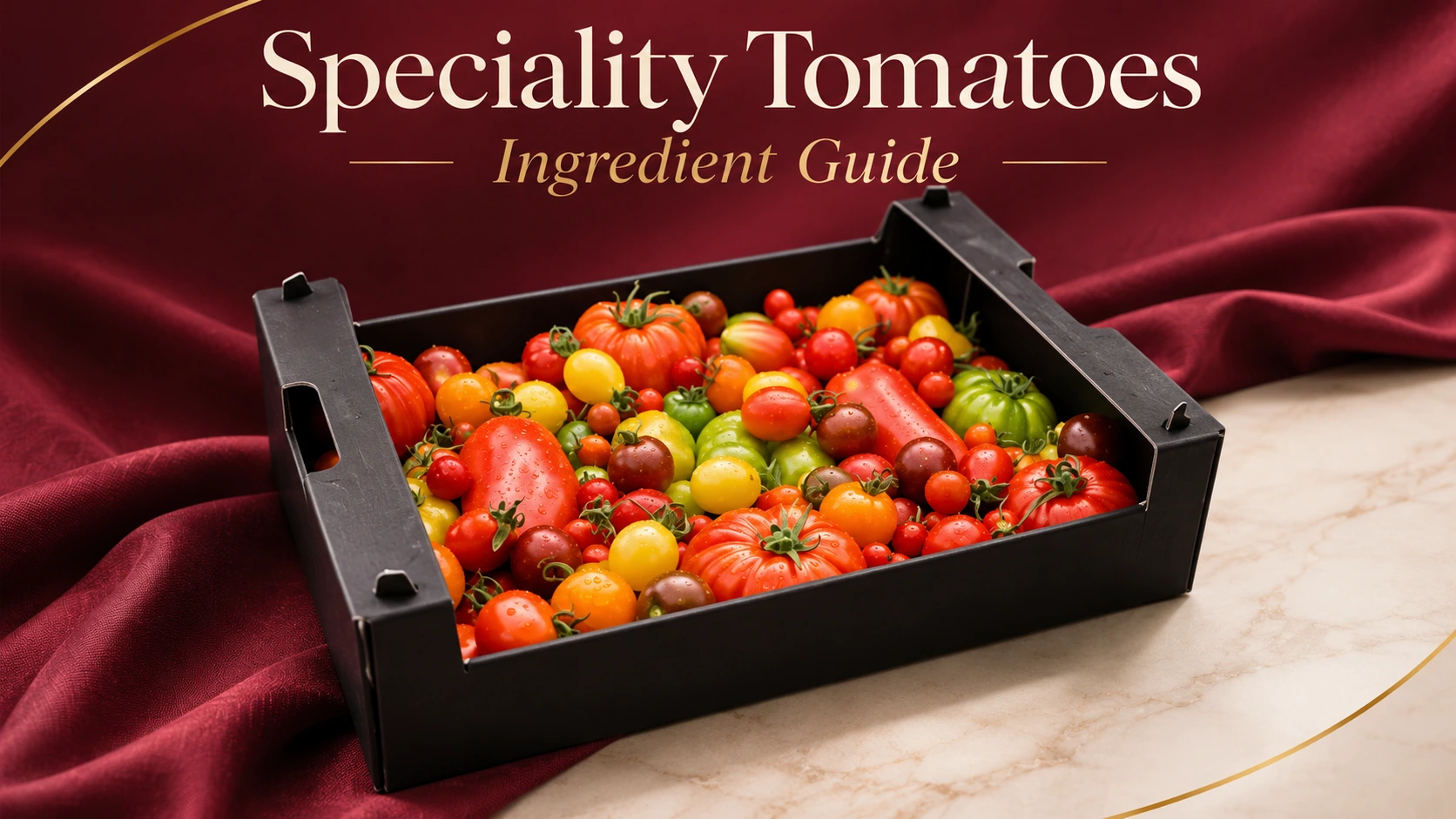
Speciality Tomatoes: A Guide to Flavour, Cooking & Serving
Colourful, characterful and remarkably versatile, speciality tomatoes can bring freshness, sweetness and visual impact to everything from simple salads to refined sharing plates.
A beautifully ripe tomato rarely needs much persuasion. At its best, it offers sweetness, acidity, juiciness and fragrance in a single bite. Bring several different tomato types together and the experience becomes even more interesting.
Speciality tomatoes celebrate that diversity. Rather than expecting every fruit to look identical, their appeal lies in differences of colour, shape, size, texture and flavour. A mixed selection can turn something as simple as tomatoes on toast, a fresh salad or a tray of roasted vegetables into a dish with genuine visual and culinary interest.
Explore Nicol Retailer’s Fresh Mixed Speciality Tomatoes 3kg for home cooking, entertaining, catering and professional food preparation.
What Are Speciality Tomatoes?
The term speciality tomatoes describes a broad group of tomatoes valued for distinctive characteristics such as colour, shape, size, texture or flavour, rather than one specific tomato variety.
Tomatoes themselves occur in a remarkably wide range of cultivars. Depending on the cultivar, fruits can differ considerably in size, shape and colour. Some are small and rounded, others are elongated, while larger types may be heavily ribbed or irregular in appearance.
That diversity is part of the pleasure of cooking with a mixed selection. Different tomatoes may contribute varying levels of sweetness, acidity, firmness and juiciness to the same dish.
For independent horticultural information, the Royal Horticultural Society’s tomato plant profile explains how tomato cultivars can differ in size, shape and colour.
“With good tomatoes, restraint is often the most luxurious seasoning.”From the Nicol Retailer Kitchen
Why Does a Mixed Selection Taste More Interesting?
Variety changes the experience. Two tomatoes that look similar may behave very differently once sliced, seasoned or cooked. Rather than assuming that colour alone determines flavour, taste each type and let its individual character guide how you use it.
Sweet & Juicy
Ripe tomatoes can offer noticeable sweetness and juiciness, making them particularly enjoyable raw or only lightly cooked.
Bright & Lively
Natural acidity gives tomatoes freshness and helps them sit beautifully alongside richer ingredients such as olive oil, creamy cheeses and avocado.
Firm or Yielding
Firmer tomatoes hold their shape neatly when sliced, while softer ripe fruit releases more juice and works particularly well in sauces, dressings and roasted preparations.
Before You Start
Mixed speciality tomatoes do not all need to be treated in exactly the same way. Before preparing them, take a moment to look at the selection in front of you.
Sort by Ripeness
Use the softest, ripest tomatoes first and reserve firmer examples for preparations where a clean slice or stronger structure is useful.
Cut to Suit
Slice larger tomatoes, halve smaller fruits and leave very small examples whole where appropriate. Varied cuts can also make a finished plate look more natural and abundant.
Season Thoughtfully
When tomatoes are the centrepiece of the dish, use seasoning to enhance rather than overpower their flavour.
Six Beautiful Ways to Use Speciality Tomatoes
One of the easiest ways to cook speciality tomatoes well is to decide whether you want to preserve their freshness or concentrate their flavour. Both approaches can produce excellent results.
Slice larger tomatoes and halve smaller ones, then finish with quality olive oil, sea salt and freshly ground black pepper.
Mix different shapes and sizes rather than cutting everything identically. Add fresh herbs shortly before serving for colour, aroma and freshness.
Roasting softens the fruit and concentrates its flavour. Olive oil, garlic and herbs such as thyme make natural partners without overwhelming the tomatoes.
Roughly chopped ripe tomatoes with olive oil and a little seasoning create an elegant topping for toasted sourdough or rustic bread.
Mozzarella, burrata, ricotta and avocado provide a pleasing contrast to the natural acidity and juiciness of ripe tomatoes.
Ripe tomatoes can be chopped and gently cooked with olive oil, garlic and herbs for a fresh-tasting sauce that works with pasta, vegetables and grilled dishes.
Let the Tomatoes Decide the Dish
A mixed box should not be treated as though every tomato is identical. The best approach is to work with the differences rather than against them.
- Reserve beautifully ripe and visually striking tomatoes for raw preparations.
- Use firmer fruit where neat slices and structure matter.
- Roast very ripe tomatoes to concentrate their flavour rather than allowing good produce to go unused.
- When roasting, group tomatoes of broadly similar size so that they cook at a more even rate.
- Add delicate herbs and final seasoning close to serving where freshness and presentation are important.
What Goes Beautifully with Speciality Tomatoes?
Tomatoes are exceptionally adaptable, but some of the most successful pairings allow their own flavour to remain clearly recognisable.
Fresh & Aromatic
Basil, parsley, chives, oregano, thyme, tarragon and chervil can all complement tomatoes, depending on the style of dish.
Soft & Creamy
Burrata, mozzarella, ricotta, avocado and good olive oil provide richness against the freshness and acidity of tomato.
Sharp & Savoury
Capers, olives, shallots, garlic and carefully used vinegar can add savoury depth and contrast without dominating the fruit.
Raw, Roasted or Gently Cooked?
Serve Raw When Freshness Is the Point
When tomatoes are beautifully ripe, serving them raw preserves their individual colours, textures and fresh character. This is ideal for salads, bruschetta-style dishes, sandwiches, sharing plates and simple starters.
Roast When You Want Concentration
Roasting softens the flesh and reduces some of its moisture, concentrating the tomato’s savoury-sweet character. Avoid overcrowding the tray so that the tomatoes roast rather than simply steam in their own juices.
Cook Gently for Fresher Sauces
Fresh tomatoes do not always need lengthy cooking. A shorter cook can produce a lighter, brighter sauce, while longer cooking creates a deeper and more concentrated result. The best method depends on the dish you are preparing.
How to Look After Fresh Speciality Tomatoes
Handle ripe tomatoes gently because softer fruit can bruise easily. Check the selection when it arrives and use the ripest tomatoes first.
Keep tomatoes dry until you are ready to prepare them, and wash them before use. Always follow any specific storage instructions supplied on the product packaging or by the supplier.
Discard tomatoes showing significant mould, deterioration or an unpleasant odour.
A Simple Way to Make Tomatoes Look Exceptional
For an elegant sharing plate, avoid cutting every tomato into the same shape. Slice larger fruits into rounds or wedges, halve smaller examples and leave particularly small tomatoes whole where suitable.
Arrange them loosely rather than piling everything into one mound. Finish with olive oil, seasoning and fresh herbs just before serving. A pale or neutral platter allows the natural colours of the tomatoes to remain the visual focus.
It is an uncomplicated approach, but that is precisely the point: excellent produce should still look and taste like itself.
Speciality Tomatoes for Catering & Foodservice
A mixed speciality tomato selection can be particularly useful for restaurants, caterers and hospitality kitchens where both presentation and versatility matter.
The same selection can move between salad preparation, cold platters, roasted vegetable dishes, breakfast service, garnishes and larger sharing dishes, helping professional kitchens make flexible use of fresh produce across a menu.
Nicol Retailer’s Fresh Mixed Speciality Tomatoes are supplied in a 3kg format and are positioned for home cooks as well as catering and professional kitchen use.
Fresh Mixed Speciality Tomatoes 3kg
Bring colour, flavour and versatility to the kitchen with Nicol Retailer’s Fresh Mixed Speciality Tomatoes 3kg — a generous fresh produce format suited to salads, sharing plates, roasting, entertaining and professional food preparation.
Shop Fresh Mixed Speciality Tomatoes 3kgBuying for a restaurant, catering business or professional kitchen? Contact Nicol Retailer for catering and business enquiries.
From Ingredient Knowledge to the Kitchen
Understanding how individual ingredients behave makes everyday cooking more intuitive. Continue exploring Nicol Retailer’s fresh produce, practical ingredient guides and premium kitchen inspiration.
Discover more practical guides to fresh produce and essential cooking ingredients.
Explore Ingredient Guides →Learn how to prepare, cook and pair one of the kitchen’s most versatile alliums.
Read the Banana Shallots Guide →Browse fresh produce for home cooking, entertaining, catering and professional kitchens.
Shop Fresh Produce →