
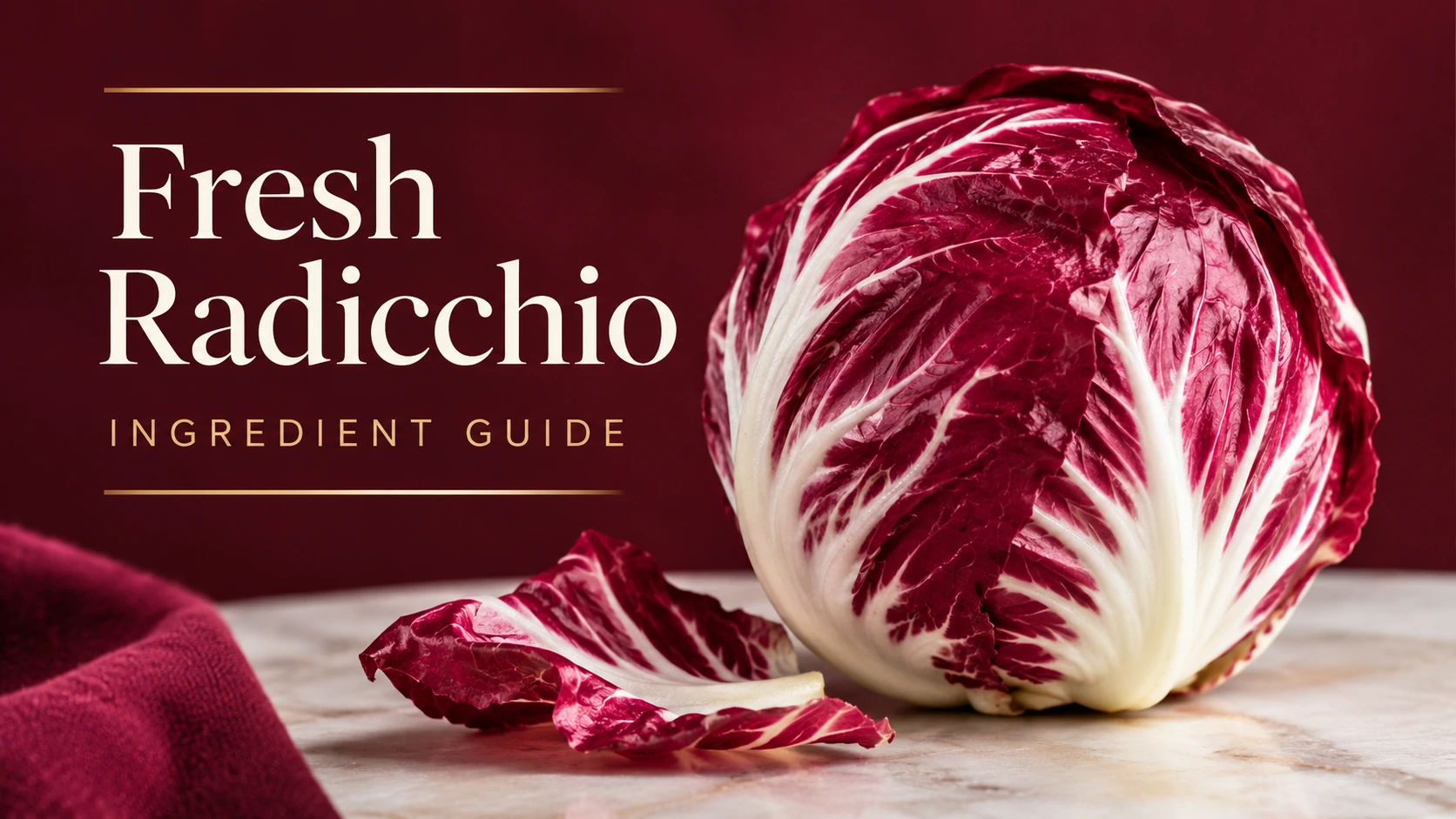
Fresh Radicchio: A Guide to Flavour, Cooking & Serving
Crisp, deeply coloured and characteristically bitter, radicchio brings contrast, structure and unmistakable Italian character to salads, grilled dishes and elegant seasonal plates.
Few salad leaves have quite the visual presence of radicchio. Its richly coloured leaves and pale veins make an immediate impression, but its appeal goes far beyond appearance.
Radicchio has a distinctly bitter, tangy character that provides welcome contrast to creamy, sweet, salty and rich ingredients. Served raw, it can be crisp and assertive. Apply heat, and that character begins to soften, creating an altogether different ingredient for the cook.
Shop Nicol Retailer’s Fresh Radicchio 1×1 for salads, grilling, roasting, catering and professional kitchen use.
What Is Radicchio?
Radicchio is a type of chicory, often recognised by its tightly formed head, deep red to purple-red leaves and contrasting pale or white veins.
It is particularly associated with Italian cooking and is valued for a characteristic bitterness that distinguishes it from milder salad leaves.
The bitterness is not something that needs to be disguised. Used thoughtfully, it becomes part of the ingredient’s appeal, providing balance against richer, sweeter or creamier components.
The Royal Horticultural Society’s guide to chicory describes radicchio as red chicory and notes that its flavour becomes milder when roasted or grilled.
“Radicchio is at its best when its bitterness is balanced, not hidden.”From the Nicol Retailer Kitchen
What Does Radicchio Taste Like?
Raw radicchio is crisp, fresh and noticeably bitter. That bitterness is one of the reasons it works so well alongside richer or sweeter ingredients.
Bold & Distinctive
Radicchio’s characteristic bitterness gives salads and composed dishes a more complex flavour profile.
Crisp & Structured
Fresh leaves have enough structure to hold their shape in salads and withstand grilling or roasting.
Milder with Heat
Cooking softens the texture and can mellow the intensity of the bitterness, particularly when the radicchio is grilled or roasted.
How to Prepare Fresh Radicchio
Radicchio needs very little preparation. Remove any outer leaves that are damaged or excessively wilted, then wash the leaves thoroughly before use.
For Salads
Separate the leaves and tear or slice them according to the style of the dish.
For Grilling
Cut the head into wedges, keeping enough of the base intact to help hold the leaves together during cooking.
For Roasting
Halves or wedges work particularly well. Lightly coat with olive oil before cooking.
Six Ways to Use Radicchio
Combine with milder salad leaves to introduce colour, crunch and a pleasantly bitter contrast.
Lightly oil wedges and grill until the cut surfaces develop colour and the leaves begin to soften.
Roasting can soften radicchio’s bitterness while developing deeper savoury notes.
Add sliced radicchio towards the end of cooking so that it wilts while retaining some texture.
Burrata, mozzarella, ricotta, blue cheese and soft goat’s cheese can all provide richness against its bitterness.
Pair lightly cooked radicchio with roasted vegetables, nuts, grains or pulses for a more substantial dish.
How to Balance Radicchio’s Bitterness
The key to cooking with radicchio is balance. Its bitterness becomes especially appealing when paired with ingredients that provide sweetness, richness, acidity or saltiness.
- Pair with pear, apple, orange or roasted grapes for sweetness.
- Add creamy cheeses for richness and contrast.
- Use toasted walnuts, hazelnuts or pine nuts for texture.
- Finish with good olive oil to soften the overall flavour.
- Use balsamic vinegar or citrus carefully to introduce acidity without overpowering the leaves.
What Goes Well with Radicchio?
Fruit & Gentle Sweetness
Pear, apple, orange, figs and roasted grapes provide a natural contrast to bitter leaves.
Cheese & Olive Oil
Soft cheeses, blue cheese, Parmesan-style cheeses and quality olive oil can soften and round out the flavour.
Nuts & Seeds
Walnuts, hazelnuts, pine nuts and pumpkin seeds work particularly well in salads and warm vegetable dishes.
Raw, Grilled or Roasted?
Raw for Maximum Crunch
Raw radicchio is crisp and assertive. Combine it with milder leaves, fruit, nuts, cheese or a balanced dressing when using it as the foundation of a salad.
Grill for Smoky Depth
Grilling brings a lightly charred character while softening the leaves and making the bitterness less pronounced.
Roast for a Softer Finish
Roasting allows the head to become tender while developing deeper flavour. Olive oil, garlic and herbs can be added without overwhelming the vegetable.
How to Store Fresh Radicchio
Keep radicchio refrigerated and use it while the leaves remain crisp and fresh.
Avoid washing it until you are ready to prepare it, unless the packaging specifically instructs otherwise. Once washed, drain and dry the leaves thoroughly before using them in salads.
Look for crisp leaves without excessive wilting or browning, and discard produce showing significant deterioration, mould or an unpleasant odour.
Making the Most of Its Colour
Radicchio is naturally dramatic, so presentation can remain simple. Its red-purple leaves and pale veins provide strong contrast on neutral plates and serving dishes.
For salads, use a mixture of whole smaller leaves and torn larger leaves rather than cutting everything uniformly. For grilled dishes, serve intact wedges so that the natural shape of the head remains visible.
Radicchio for Catering & Foodservice
Radicchio can be particularly useful in professional kitchens because a single ingredient can move easily between salads, garnishes, vegetable sides, grilled preparations and warm dishes.
Its strong colour also makes it useful where visual contrast matters, while its bitter character can help balance richer menu components.
Nicol Retailer’s Fresh Radicchio 1×1 is offered as a practical fresh-produce option for everyday cooking, catering and professional foodservice.
Fresh Radicchio 1×1
Bring colour, crunch and distinctive flavour to salads, grilled dishes and seasonal menus with Nicol Retailer’s Fresh Radicchio.
Shop Fresh RadicchioBuying for a restaurant, catering business or professional kitchen? Contact Nicol Retailer for catering and business enquiries.
Discover More Fresh Produce
Build confidence in the kitchen by understanding the ingredients you cook with and how their individual qualities can shape a finished dish.
Explore more Nicol Retailer ingredient guides, preparation advice and culinary inspiration.
Explore Ingredient Guides →Browse fresh produce for home cooking, catering, hospitality and professional kitchens.
Shop Fresh Produce →